
Recent Posts
Managing University Anxiety: A Student’s Guide to Mental Health Support in Nottingham
Starting university in Nottingham can be an exciting new life. Whether you’re studying at the University of Nottingham, Nottingham Trent University,
September 17, 2026, 11:51 am
The Black Sheep
Have you ever been called the black sheep? I certainly have, but what does it mean and what is its impact?
The black sheep is usually the one person that does not fit in the family dynamics, the odd one, the peculiar one, the weirdo, the...
September 14, 2026, 4:21 pm
A Counsellor’s Response to Channel 4’s The Great ADHD Myth?
I didn’t want to write another blog about ADHD so soon after my last one, but the Channel 4 documentary -
August 28, 2026, 2:29 pm
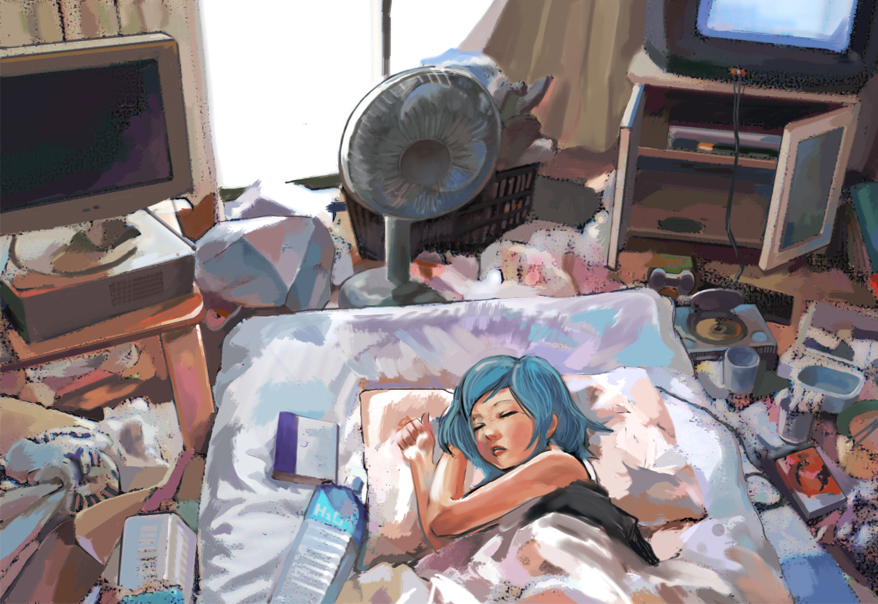
Picture by uturo128 deviant art
We all collect things or have things that feel precious to us. For me its books. I have three bookcases full of books and there are plans for more! These things we collect have meaning for us, whether it is sentimental, financial or emotional, and we are connected to them. When this is reasonable and our collections are part of our lives, not all of it and we can throw things away, we are collecting and not hoarding.
It’s hard for hoarders to discard, donate, recycle or let go of their possessions. Their possessions have taken on a special meaning for them. They could represent an opportunity, or they could become an old friend. Some people can’t throw away something that is ‘pretty’. For some throwing things away is wasteful, whereas others have developed such a ritual about throwing things away the process is long, elaborate and painful, so it does not happen.
The house of the hoarder is beyond messy or untidy. The clutter stops them from using their house fully and certainly creates issues moving around the house easily, and in some cases, safely. As a minimum, hoarders don’t feel they can invite anyone to their house due to the level of clutter and at the other end of the scale, they can’t use a room like a kitchen or bathroom as the clutter has taken over.
Hoarders love to ‘acquire’ more. This is not necessarily from buying more, as it can be bin diving or taking the unsold items from a car boot. They are compelled to do this and stopping is very difficult.
To add to all of this, hoarders can’t see they have a problem. They wonder why people are complaining and will resist all offers to help. So, in the end, frustrated family and friends give up on them and they become more isolated with their precious hoard.
So why do people become hoarders? This condition is often found alongside Obsessive-Compulsive Disorder (OCD) - The ritual and repetitive behaviours are an important part of having a hoard. Hoarders are often found to have depression, and the low energy associated with depression can often be the reason the hoard remains untouched for years. ADHD is also a common condition for hoarders, as the chronic inability to remain focused and attentive means the hoard grows without being sorted or organised. Perfectionism is often part of the belief system of a hoarder. What would happen if they threw away something useful? This becomes anxiety and worrying thought so it’s better to not make a decision unless they are absolutely sure they are right, which is often impossible.
Usually, all hoarders get a feeling of safety and security from their hoard, as it protects them from people and a hostile world. This can be a physical feeling of security and an emotional one. For some it makes anyone trying to deal with hoard unbearable.
So how do we help ourselves if we may be a hoarder?
We need to tell people we have an issue and that we need help. Then we need to make a very small start, such as pick a box, case or even a room and decide every day you will give this area 15 minutes to an hour of our time and clear it.
We need to make the key decision of keep or throw within 20 seconds, so we don’t ruminate on the object and go with our initial decision.
Make sure someone takes away everything we throw out immediately so we can’t go back and change our mind. Remember we do not have to be responsible for the fate of the objects we throw away – we don’t need to know where it went!
If this feels too difficult there are de-cluttering companies or house clearance companies who can help, however they may not allow us to have the level of control we need. Cognitive Behaviour Therapy (CBT) is often successful with hoarders as it works on the thought process and rituals in place for the hoarder.