
Recent Posts
Mindfulness in Carlton and Nottingham: Finding Calm in a Busy World
I use mindfulness in my practice, it’s a valuable tool for me and my client to find ways to manage stress, understand emotions and become kinder to ourselves.
October 17, 2026, 11:53 am
What Is Relational Therapy?
Relationships are an important part of being human. The way we connect with other people can influence how we see ourselves, how we respond to situations, how we regulate our nervous system and how we cope when life feels difficult.
...October 5, 2026, 4:22 pm
Managing University Anxiety: A Student’s Guide to Mental Health Support in Nottingham
Starting university in Nottingham can be an exciting new life. Whether you’re studying at the University of Nottingham, Nottingham Trent University,
September 17, 2026, 11:51 am
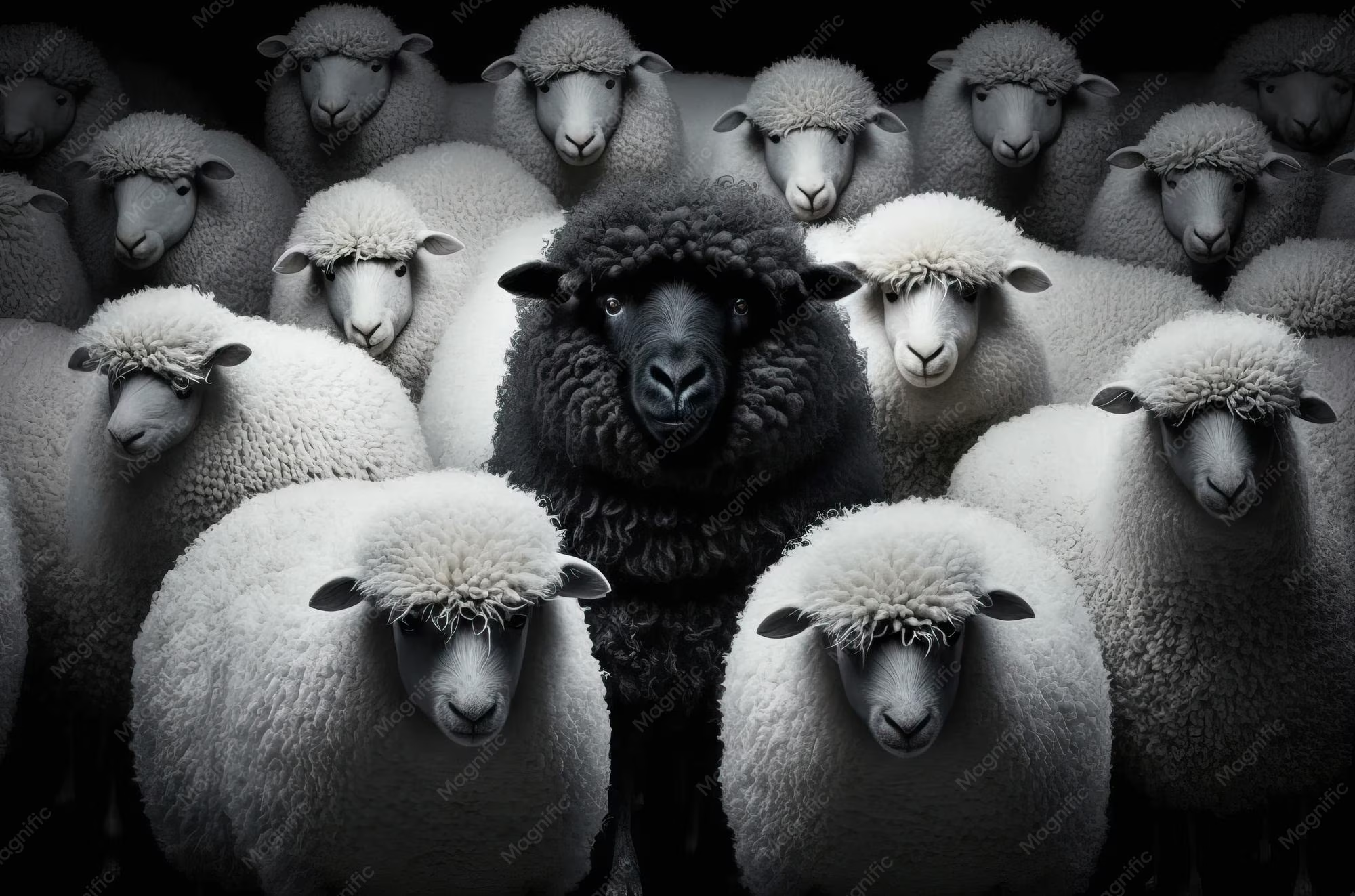
Have you ever been called the black sheep? I certainly have, but what does it mean and what is its impact?
The black sheep is usually the one person that does not fit in the family dynamics, the odd one, the peculiar one, the weirdo, the one doesn’t follow family traditions/values or is a rebel. Definitely not part of the family “herd of sheep”. It always means the one that gets gossiped about, condemned and often shunned.
How do you know if it’s you that’s the black sheep?
Some easy signs are getting the blame for family issues (indirectly or directly), getting left out of the good stuff like celebrations or announcements. Not having much in common with your family, never feeling understood or connected to them, being the butt of the jokes, bullied, shamed and teased for being yourself. Your achievements are not celebrated, everything you have an interest in or believe in is “just a phase”, it’s not safe to share what you care about because you know it will be belittled. Having different opinions or beliefs to the rest of the family, you can even feel like you were adopted or swapped at birth as this is the wrong place for you.
The black sheep of the family can be split into two distinct definitions, the person who deviates from the family expectations. The actor from a family of scientists, the atheist in a conservative religious family etc. But it should be noted that a lot of these families can and do accept the differences, the black sheep comes from the families where they do not.
The other black sheep is the scape goat, the root of all that is wrong, the one who is blamed for everything and then ostracized. Many scapegoats have neurodivergence or chronic illnesses that are used against them, “burden, useless etc”. These black sheep are used as a warning to other family members “if you carry on like that, you’ll end up like our Elaine “. It’s a no-win role, as if you are successful in anything it will be used against you and you will be “too big for your boots”.
This role has a clinical name – the Identified Patient , the person in the family who is used to be the expression of and a deflection from the family’s dysfunction and issues.
The impacts of being the black sheep are wide ranging and can need therapy to move on from. Both kinds of black sheep will not feel safe and accepted in their own home, effecting their sympathetic nervous system development , their attachment to caregivers and their sense of self-worth. Complex Post Traumatic Stress Disorder, anxiety, depression, Emotionally Unstable Personality Disorder, disassociation and addiction are also more common issues for the black sheep.
The ability to belong in any kind of situation is impacted (too scared be authentic), you feel alone, you know there is something wrong with you, commitment and trust in relationships is often too difficult. You are either a loner or co-dependant in friendships, you know if they really knew you, they wouldn’t like you and you feel shame about yourself, your actions and thoughts most of the time.
What to do?
Boundaries are vital – what will you tolerate? Can you be with your family and be, okay? You could have a much more distant relationship with them, more by text than face to face, celebrations or holidays only.
Where is your line in the sand, what can you roll your eyes vs what do you have to walk away from? Stick with that decision, you do not have to tolerate scapegoating and shaming any more, from calling them out to simply leaving protect your mental health at all costs. Defend your boundaries. If you must be in contact or care for your family learn the art of grey rocking, indifferent and unaffected.
Find your tribe – the family you picked. Finding friends who you connect with, who love you for who you are, where being yourself is honoured and where you feel safe. Sometimes you need different tribes for different parts of you – the creative tribe, the spiritual tribe, the fun tribe, the travelling tribe etc, but together they can be the family you should have had.
Let go of the blame - your families disfunction is not your fault. Your family’s projection on to you is not your fault. Their anger, fear or trauma is not your fault and it’s not your role to make it better. You may have made mistakes but that makes you human not the reason for the issues in your family. Acceptance of this can be really difficult, journaling and when you are ready looking at your family’s issues and their origin can often help you understand why you were treated this way.
Look after your inner child – letting go of the hope that if you try hard enough things will change. Your inner child will be wounded by being the black sheep, learning to love and comfort the inner child should be compassionate, soothing, create safety and allow them to feel the hurt. Along with letting go of the responsibility of making the family feel better by changing who you are to fit their way of being.
Being the black sheep is difficult, but recovery is possible, you are enough just as you are, you are not responsible for the issues in your family and sometimes family is the one you chose.
If this is you and you need some help get in contact and let see how we can work together.