
Recent Posts
Managing University Anxiety: A Student’s Guide to Mental Health Support in Nottingham
Starting university in Nottingham can be an exciting new life. Whether you’re studying at the University of Nottingham, Nottingham Trent University,
September 17, 2026, 11:51 am
The Black Sheep
Have you ever been called the black sheep? I certainly have, but what does it mean and what is its impact?
The black sheep is usually the one person that does not fit in the family dynamics, the odd one, the peculiar one, the weirdo, the...
September 14, 2026, 4:21 pm
A Counsellor’s Response to Channel 4’s The Great ADHD Myth?
I didn’t want to write another blog about ADHD so soon after my last one, but the Channel 4 documentary -
August 28, 2026, 2:29 pm
I didn’t want to write another blog about ADHD so soon after my last one, but the Channel 4 documentary - The Great ADHD Myth? forced my hand in protest
I’ve taken my time to mull over what I watched on Channel 4, mostly because I was angry and understandably emotional. As a late diagnosed woman with ADHD who had over ten years therapy trying to work out what was ‘wrong’ with her, and ADHD was the answer .I guess I was insulted and felt dismissed by the program.
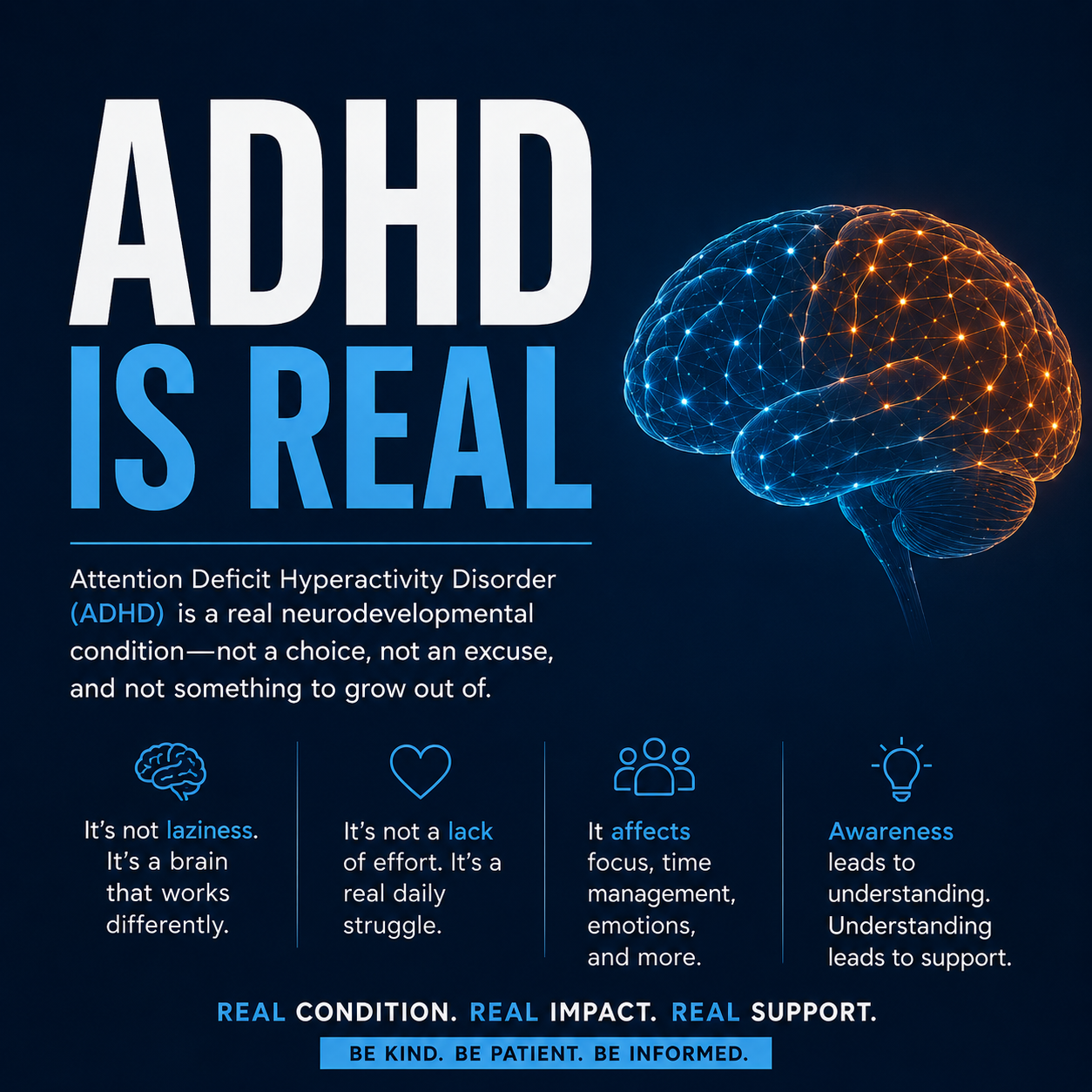
In some ways, the documentary, has generated an important conversation about ADHD, diagnosis, medication and the pressures faced by children,adults and families. The programme set out to question whether ADHD is a genuine neurodevelopmental condition or whether some of the behaviours associated with it are being shaped by modern society.
In my role as a counsellor, I believe questioning and reviewing the way we understand ADHD is valuable. We should absolutely be asking whether assessments are thorough enough, whether children are receiving the right support, whether schools are equipped to meet different needs, and whether medication is always being considered as part of a wider, individualised approach. The whole support system for people with ADHD is sorely inadequate.
But there is a massive difference between questioning how ADHD is diagnosed and supported and questioning whether the experiences of people with ADHD are real. Behind every diagnosis is a person who has been called lazy, stupid or attention seeking, or my favourite statement about stricter parenting is needed – did you meet my mum?
For me, the ADHD diagnosis finally provided a framework for understanding years of difficulties. It helped explain my struggles with impulsivity, emotional regulation, organisation, relationships, school or work. The shame that I could not mention, the self-doubt and the imposter syndrome that come from never fitting in a box that I was not designed to fit into.
That doesn't mean every difficulty I have or is caused by ADHD.
Nor does it mean every diagnosis is necessarily correct. Good assessment matters enormously.
The documentary’s has concerned many people within the ADHD community. The Royal College of Psychiatrists has emphasised that ADHD is a well-established neurodevelopmental disorder and that the focus should be on improving the quality of assessment and access to appropriate support, rather than invalidating the condition itself.
But we also need to remember that behind the statistics and debates are real people and families. A child who is struggling in school isn't simply a diagnosis. The parents who I work with have spent years trying to understand their child's behaviour and this isn't simply part of a trend. When I finally understood why certain aspects of everyday life have felt unusually difficult, I was not simply following TikTok!
Our experiences deserve to be heard with curiosity, compassion and respect.
One of the biggest problems with conversations about ADHD is the tendency to make them binary. It is real or it’s a fad? It needs medication to be real and so on. The argument that its increased too much is not even looking at lockdown, its impact and the lack of structure and routine that non diagnosed people used to manage their symptoms.
The Royal College of Psychiatrists says that diagnosis requires a comprehensive clinical assessment that considers other explanations, co-occurring conditions and the persons wider circumstances. Support can involves many approaches, like organisational strategies, therapy, coaching, lifestyle changes and medication only where clinically appropriate. That complexity is what we should be discussing.
What does counselling have to offer?
Counselling cannot "cure" ADHD, and it is not an alternative to appropriate medical care.
What counselling can offer is a safe space to explore the emotional impact of living with ADHD or with difficulties that may resemble ADHD.
That might include self-esteem, shame, frustration, anxiety, relationships, emotional regulation, rejection sensitivity, difficulties at work, or the experience of constantly feeling that you are somehow "getting it wrong."
For me, receiving a diagnosis was an enormous relief. For others, it can bring complicated emotions as they look back over experiences they previously misunderstood and the grief of what they have missed out on due to having ADHD.
Therapeutic support can help people develop greater self-understanding and recognise their strengths as well as their challenges.
So, challenge the system—not the person, there are many real issues that need reviewing and changing. Why are ADHD assessment waiting lists so long? Are people receiving high-quality assessments? Are schools sufficiently supported and funded to understand neurodivergent children? Are adults being recognised when ADHD presents differently from the stereotypes? (gender and racial differences are not considered, as DSM 5 for example is based on white male ADHD symptoms) What support do people need?
The Royal College of Psychiatrists has warned that language surrounding neurodevelopmental conditions matters because it can contribute to stigma and discourage people from seeking appropriate support.
Moving beyond the "myth"
For me, the most useful outcome of the documentary would be to encourage better questions rather than greater doubt and stigmatise people's experiences.
The conversations we need to be having are around diagnosis, medication, education, parenting, technology while safe in the knowledge that ADHD is a genuine neurodevelopmental condition. Most importantly, people living with ADHD MUST be part of that conversation.
Like all medical conditions we deserve professionals and services that are willing to be person centred—not simply a diagnosis.